
Discover the diverse sparkling wines of France, from elite champagne to affordable crémant. Learn to read labels to choose the perfect bottle. A comprehensive overview of varieties, regions, and styles.
Sparkling Wines of France: Types, Champagne, and Crémant, How to Read the Label
France is the birthplace of the world's finest sparkling wines. Here, the legendary champagne was born, alongside numerous other types such as crémant, blanquette, or clairette. This article will unveil the diversity of French sparkling wines, explain the key grape varieties, and teach you how to understand champagne and crémant labels. Regardless of your budget, you will be able to choose a wine that impresses with its taste.
Main Types of Sparkling Wines in France
French sparkling wines are not just champagne. They are categorized by regions, production methods, and styles. The main rule: true champagne is produced exclusively in the Champagne region using the classic method of secondary fermentation in the bottle. Other sparkling wines from France have their own appellations and characteristics.
Champagne (Champagne AOC)
The most prestigious sparkling wine, associated with celebrations. Made from three main grape varieties:
- Pinot Noir — a red variety, adds citrus notes and red berry aromas.
- Pinot Meunier — provides richness, roundness, and yellow apple aromas.
- Chardonnay — a white variety for acidity, citrus, and marzipan notes.
The Champagne region is divided into zones: Montagne de Reims (Pinot Noir), Vallée de la Marne (Pinot Meunier), and Côte des Blancs (Chardonnay). Vineyards are classified as Grand Cru (17 communes) and Premier Cru (41 communes).
Crémant
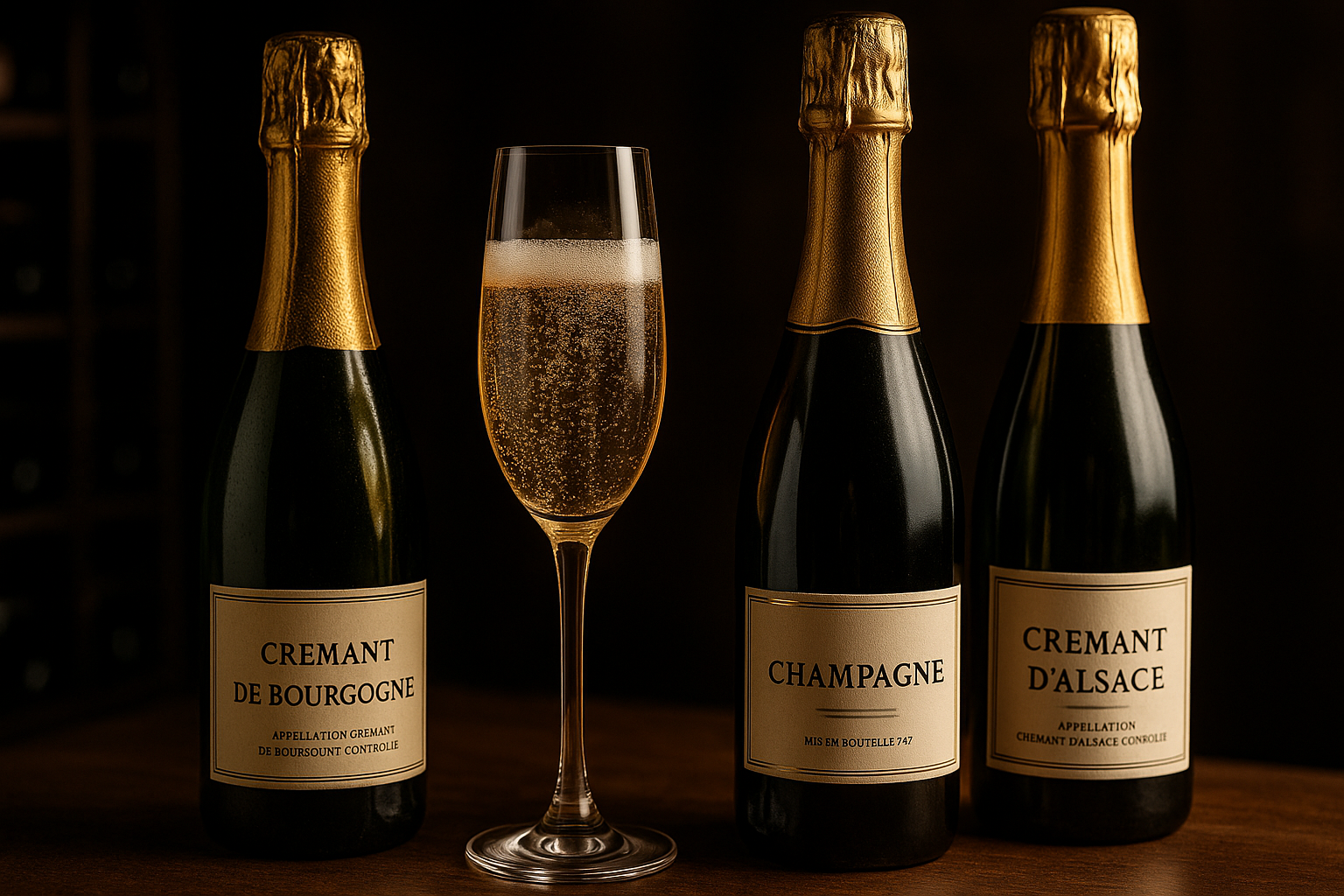
An affordable alternative to champagne, produced using the same method but in other regions: Alsace, Bordeaux, Burgundy, Loire, Jura. Chardonnay, Pinot Noir, Pinot Meunier, as well as Pinot Blanc, Pinot Gris, or Arbanne are used. Examples: Crémant d'Alsace, Crémant de Bourgogne, Crémant de Loire. Crémant has fine bubbles, freshness, and a lower price.
Other Types of Sparkling Wines
- Blanquette de Limoux — the oldest sparkling wine in France (since 1531), made from Mauzac (similar to Muscat), with an alcohol content of 6-9%.
- Clairette de Die — light, fruity, with Muscat.
- Vin Mousseux / Vin Pétillant — simple sparkling wines without an appellation, less carbonated.
Styles of champagne and crémant: Brut (dry), Extra Brut (very dry), Demi-Sec (semi-sweet). Rosé — with red berry notes.
Styles and Classification of Champagne
Champagne is divided by composition and aging:
- Non-Vintage (NV) — a blend of harvests from different years for stability.
- Blanc de Blancs — 100% Chardonnay, refined, from Grand Cru Côte des Blancs.
- Blanc de Noirs — from Pinot Noir and Pinot Meunier, rich.
- Rosé — white from red varieties via saignée (skin contact).
- Vintage / Millésime — from a single harvest, only in the best years, for collectors.
- Prestige Cuvée — top-tier, aged, like Dom Pérignon or Krug.
Production method — méthode champenoise: primary fermentation, tirage (adding yeast), aging on lees, riddling (turning), disgorgement.
How to Read a Champagne Label
The label is the key to understanding the wine. Here's a step-by-step guide:
- Appellation: Look for "Appellation Champagne Contrôlée" — a guarantee of origin. Without this, it's not champagne.
- Producer (Négociant Manipulant, NM): RM (farmer), CM (cooperative), etc. NM — large houses like Moët & Chandon.
- Style: Brut, Extra Brut, Sec, Demi-Sec. Brut Nature — the driest (0-3 g/l sugar).
- Composition: Blanc de Blancs, Blanc de Noirs, % of varieties (e.g., 50% Pinot Noir).
- Aging: NV — minimum 15 months, Vintage — 3 years. Additional markings: Grand Cru, Premier Cru.
- Harvest: Millésime + year (e.g., 2015) — rare.
- Maturation: Dosage — level of sweetness after disgorgement.
Example: Louis Roederer Cristal Brut Vintage — NM, Vintage, Grand Cru Chardonnay + Pinot Noir.
How to Read a Crémant Label
Similar to champagne, but with the region:
- Crémant de [region]: Crémant d'Alsace, Crémant de Bourgogne.
- Style: Brut, Rosé, Millésime.
- Varieties: Dominated by Chardonnay, or a blend.
- Aging: Minimum 9-12 months on lees.
Examples: Ackerman Crémant de Loire Brut — fresh, fruity; Albert Bichot Crémant de Bourgogne Rosé — berry-like.
Tips for Choosing and Serving
Choose Brut for an aperitif, Rosé for berry dishes, Vintage for special occasions. Temperature: 8-10°C. Glasses — tulip-shaped for bubbles. French sparkling wines range from 15-20 euros for crémant to 35 and more for champagne.
Experiment: start with NV Brut, move to Blanc de Blancs. France offers sparkling wines for every taste — from classics to discoveries.







Comments (0)
No comments yet. Be the first to comment!
Leave a Comment