

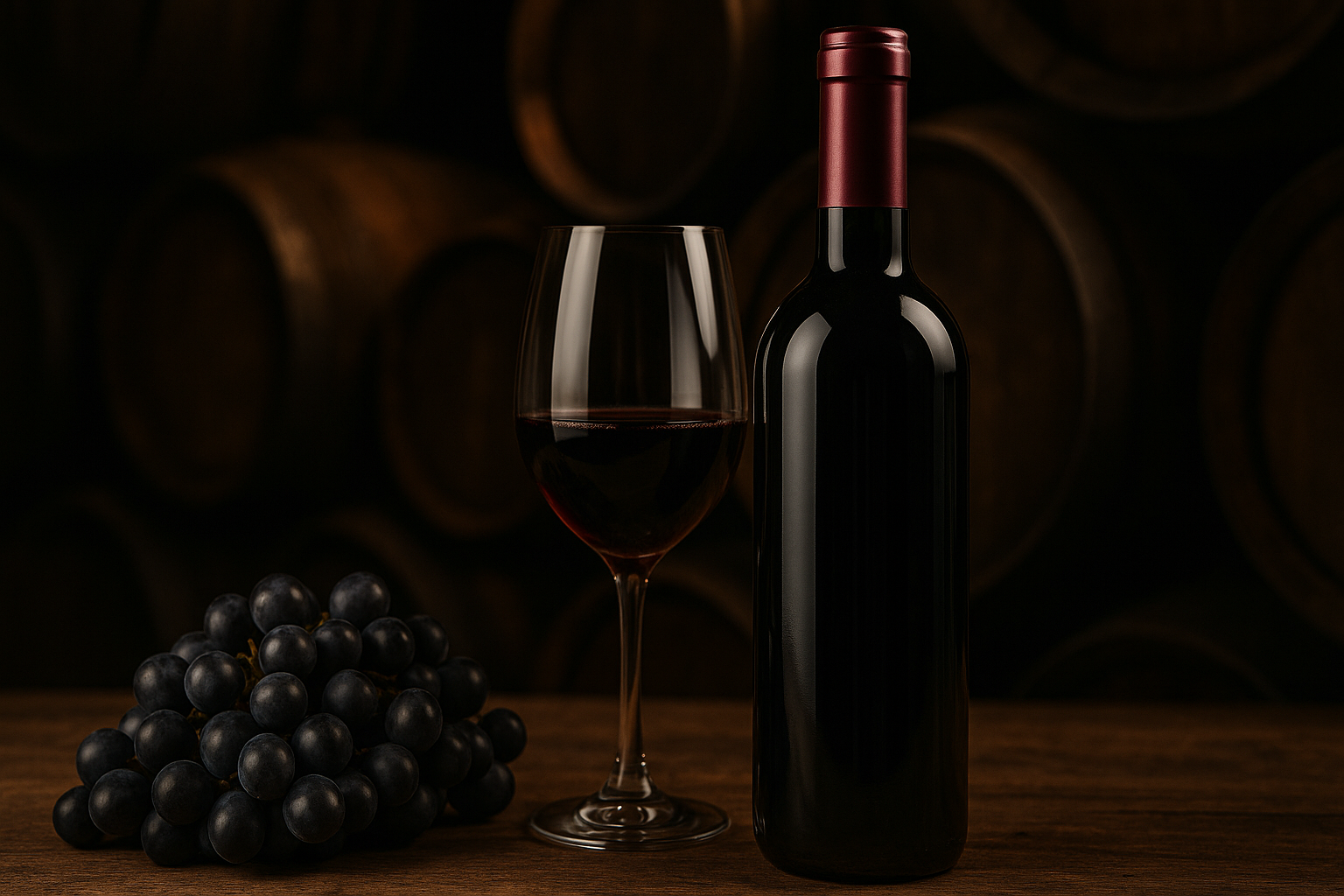
Petit Verdot — a mysterious variety in Bordeaux wines that adds magic but rarely exceeds 5%. We explore the reasons for its modest role, its impact on taste, and why climate is changing the rules of the game. Perfect for classic enthusiasts!
If you are a fan of Bordeaux reds, you have probably heard of Petit Verdot — the "Monsieur 5%" who quietly works in the background, making your favorite blends deeper and more aromatic. Why does this variety, with its powerful tannins and spicy notes, rarely take the spotlight? Today, we'll explore the reasons, the taste implications, and how global changes affect its fate. Prepare your glass — it will be tasty and informative!
Who is Petit Verdot: a brief history and characteristics
Petit Verdot is a French red grape variety, whose name translates to "little green." Don't be surprised: despite the black color of the berries, they remain green for a long time due to late ripening. Originating from the Béarn region, the variety became an integral part of Bordeaux in the Middle Ages but almost disappeared in the 19th century due to phylloxera and climate issues. Its revival occurred in the 1980s on the wave of fashion for "forgotten" varieties.
The botany is simple: small round berries with thick rough skin covered with a waxy coating, medium-sized bushes, loose clusters. Growth strength is average, yield is low. The variety is sensitive to powdery mildew but resists leafhopper well. In Bordeaux, it occupies only 870 hectares — a trifle compared to Cabernet Sauvignon or Merlot.
Why is Petit Verdot a "supporting role" in Bordeaux blends?
In classic Bordeaux blends (Left Bank: Cabernet Sauvignon, Cabernet Franc, Merlot, plus Malbec and Petit Verdot), this variety is a typical "seasoning." Its share rarely exceeds 5%, and in some châteaux, it's only 1-2% or less. Why is that?
1. Late ripening — the main enemy
Petit Verdot is a champion of late ripening. In the cool climate of Bordeaux, the berries ripened only 1-2 times in 10 years! Winemakers waited until October-November, risking rain, rot, and unripe tannins. Only on the warm, gravelly soils of Médoc (Margaux, Saint-Julien) or southern châteaux like Château La Lagune (where they add up to 10%), it felt comfortable.
2. Capriciousness and low yield
The variety poorly tolerates drought (water stress) — a relevant problem in Bordeaux due to climate change. The thick skin gives powerful, sometimes "prickly" tannins if the grapes are unripe. The yield is low, so there is no mass cultivation. Winemakers prefer stable varieties.
3. Role in the blend: like a spice
Petit Verdot is not a soloist but an accent. It fixes the color, adds structure and aroma without dominating. In Grands Crus Classés (Médoc, Graves), it is used for "first wines," but minimally, to avoid overloading the balance.
Advantages in the blend: Rich color, voluminous tannins, freshness.
- Risks: Excessive share — the wine becomes rough, green, with an excess of tannins.
Impact on taste: causes and consequences
When Petit Verdot ripens perfectly, it is a star! Its contribution to the blend transforms an ordinary Bordeaux blend into a masterpiece. Let's break it down.
Aromatic profile
Bright notes of violet (a signature trait!), spices (black pepper, sage), chocolate, licorice. Fruits: black currant, blueberry, ripe cherry. Spicy shades resemble Syrah, adding complexity.
Taste and structure
Powerful body, high alcohol (balanced by acidity), juicy, chewy tannins. The wine seems "big," textured. In the blend, it:
- Enhances color: Makes the ruby hue deeper.
- Adds freshness: Acidity counteracts the heaviness of Cabernet.
- Emphasizes elegance: In Margaux — finesse, in Médoc — strength.
Consequences for taste: Without Petit Verdot, the blend loses depth, aromatic complexity, and a long aftertaste. With it — the wine comes alive, acquiring a "Bordeaux soul." But cross the line with the measure — and green notes, bitterness dominate.
Modern trends: is the climate saving the variety?
Climate change is an ally of Petit Verdot! Warmer autumns allow it to ripen more often. In Bordeaux, the area is growing, and in other regions, the variety is flourishing:
Italy (Maremma, Sicily): In super Tuscans and mono-varietals — earth, wet stone, musky tannins.
Argentina: With Malbec, rich, with coffee and spice flavors. Maintains acidity thanks to temperature fluctuations.
Gastronomy: what to pair it with?
A powerful wine requires powerful food! Grill, barbecue, kebabs, lamb, steaks, ribs in sauce. Spices are a friend, not a foe.
Conclusion: Petit Verdot — Bordeaux's secret weapon
Little does not mean unimportant. Petit Verdot proves: beauty is in the details. Its modest role makes Bordeaux blends legendary — deep, balanced, unforgettable. Try wines with it, and you'll feel the magic! What's your favorite? Write in the comments. Chin-chin!








Comments (0)
No comments yet. Be the first to comment!
Leave a Comment