

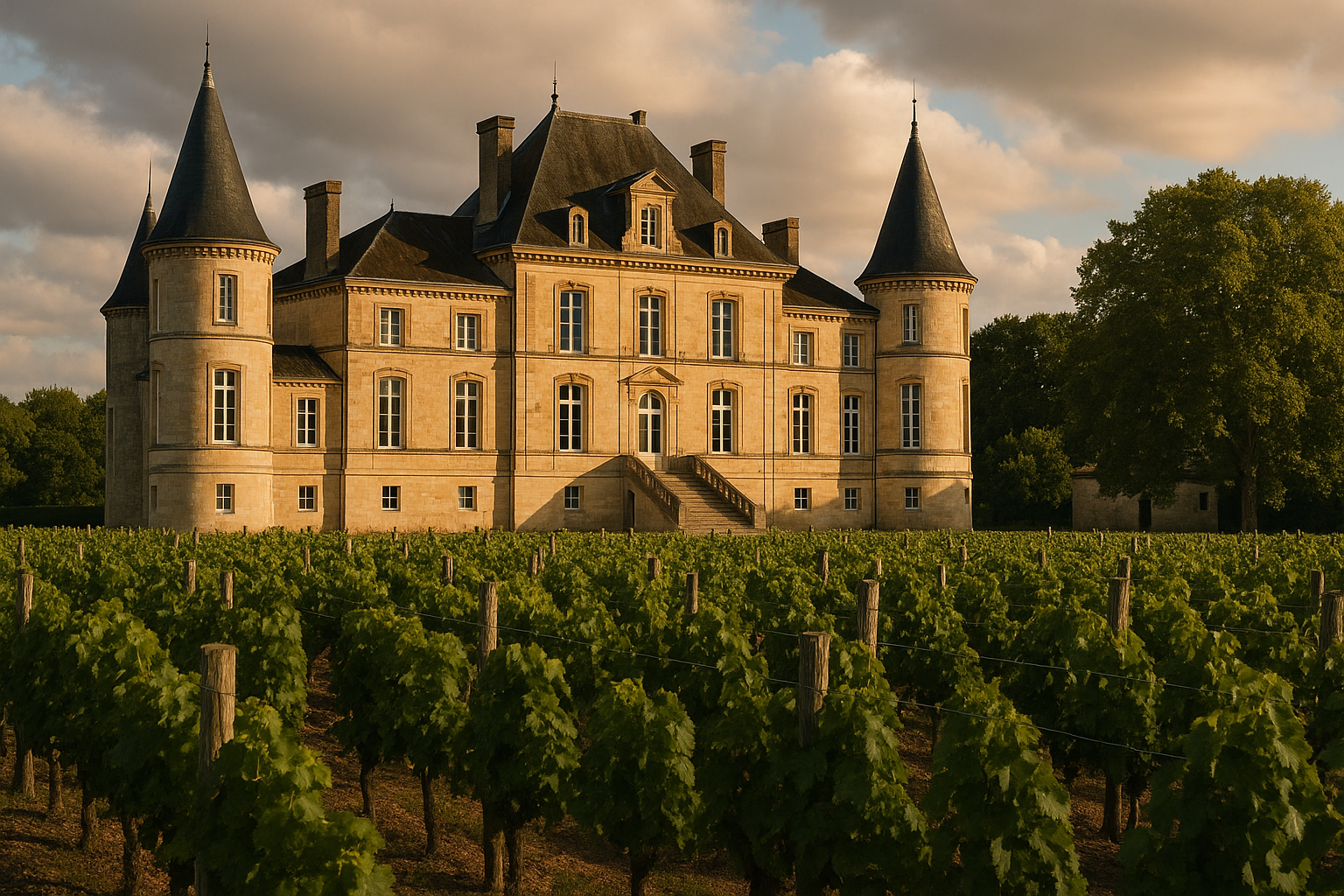
Learn about the elite châteaux with Grand Cru Classé classification in Bordeaux. What wines they produce as first and second crus, and how much a bottle costs. An overview of the history, terroir, and prices of France's legendary wines.
Château Grand Cru Classé in France: Legends of Bordeaux and Their Wines
French Bordeaux wine is not just a drink, but a symbol of luxury, history, and perfection. Among thousands of châteaux, those that have received the status of Grand Cru Classé hold a special place — an elite classification from 1855 for red wines of Médoc and Graves. This system divided estates into five classes, with the first crus (Premier Cru) at the top of the pyramid. In this article, we will explore what a château with such a name is, what their main wines are (first and second crus), and the average prices for bottles. We will focus on the most famous examples, based on historical facts and current market data.
What is Grand Cru Classé? A Brief History of the Classification
The Grand Cru Classé (Grand Cru Classé) classification was created in 1855 by order of Napoleon III for the World's Fair in Paris. Bordeaux brokers ranked the Médoc châteaux (appellations Margaux, Saint-Julien, Pauillac, Saint-Estèphe, Pomerol) and Sauternes by the quality and reputation of their wines. The five first crus are Haut-Brion, Lafite Rothschild, Latour, Margaux, and Mouton Rothschild (the latter elevated in 1973). Graves received a separate classification in 1953 with Haut-Brion at the forefront.
Today, the status is inherited, but châteaux invest in modern technologies. Wines are aged in oak barrels, with a dominance of Cabernet Sauvignon.
First Crus: The Kings of Bordeaux
Premier Cru (Premier Grand Cru Classé) — only five châteaux. Their main wines are flagship, with huge aging potential (20–100 years). Second wines (Second Wines) are younger lots, more affordable in price.
Château Haut-Brion (Pessac-Léognan)
The oldest château, vineyards from the late 16th century. Known since the times of Thomas Jefferson. First cru: Château Haut-Brion — a blend of Cabernet Sauvignon (45–55%), Merlot (35–45%), Cabernet Franc. Aromas of black berries, truffles, silky tannins. Annual production ~10,000 bottles.
Second wine: Le Clarence de Haut-Brion — softer, for early consumption. Average price Premier: 2000–5000€ per bottle 2010+ (depending on vintage); Second: 150–400€.
Château Lafite Rothschild (Pauillac)
An icon of Bordeaux, since 1234. First cru: Château Lafite Rothschild — Cabernet Sauvignon dominates (80–95%). Elegant, with notes of cedar, blackcurrant. Second: Carruades de Lafite.
Prices: Premier ~3000–10000€; Second 200–600€.
Château Latour (Pauillac)
Founded in the 14th century, known for powerful wines. First cru: Château Latour (classic blend). Second: Les Forts de Latour — almost on par with the first. Prices: 2500–8000€ and 150–500€ respectively.
Château Margaux (Margaux)
The elegance of Margaux. First: Château Margaux. Second: Pavillon Rouge. Prices: 2000–7000€ / 150–400€.
Château Mouton Rothschild (Pauillac)
The only one elevated to first cru in 1973. First: Château Mouton Rothschild. Second: Le Petit Mouton. Prices: 2500–9000€ / 200–500€. Known for labels by Picasso, Dalí.
Second and Lower Crus: Accessible Elite
Second crus (Deuxième) — 14 châteaux, like Léoville-Las Cases, Pichon-Longueville. Third (Troisième) — Giscours, Kirwan. Fourth — Saint-Pierre. Fifth — the most numerous.
Examples of Second Crus
Château Léoville-Las Cases (Saint-Julien): First cru — powerful, second Le Petit Lion. Prices: 300–1000€ / 50–150€.
Château Cos d'Estournel (Saint-Estèphe): Second cru with an Asian flair. First ~400–1500€.
Third Cru: Château Giscours (Margaux)
With a long history, third Grand Cru Classé. Composition: Cabernet Sauvignon 70%, Merlot 20%, Cabernet Franc 10%. Aged 18 months in oak. First wine: Château Giscours — rich, for aging 20+. Price: 80–250€ per bottle 2014+.
Fourth Cru: Château Saint-Pierre (Saint-Julien)
Since 1693. Status of 4th Grand Cru Classé. Wines match the class: structured, with a granite terroir.
Average Bottle Prices: From Affordable to Collectible
In Ukraine/Europe: Haut-Brion 2007 ~500–1000€, Giscours 2014 ~100–200€. Young vintages are cheaper, legendary (1982, 2005) — investments.
Production: Technologies and Terroir
Gravel soils of Médoc are ideal for Cabernet. Fermentation in steel/concrete (28–30°C, 18–24 days), aging in new oak barrels (12–24 months), clarification with egg whites. Biodynamics in many châteaux (Lafite, Pontet-Canet).
Tips for Connoisseurs
Start with second wines — top price/quality ratio.
Vintages: 2010, 2015, 2016, 2020 — legendary.
Pairing: steak, game, Roquefort cheese.
Buy from trusted wine shops, watch auctions.
Grand Cru Classé — the embodiment of French grand tourism. Try it — and Bordeaux will enchant you forever!







Comments (0)
No comments yet. Be the first to comment!
Leave a Comment