

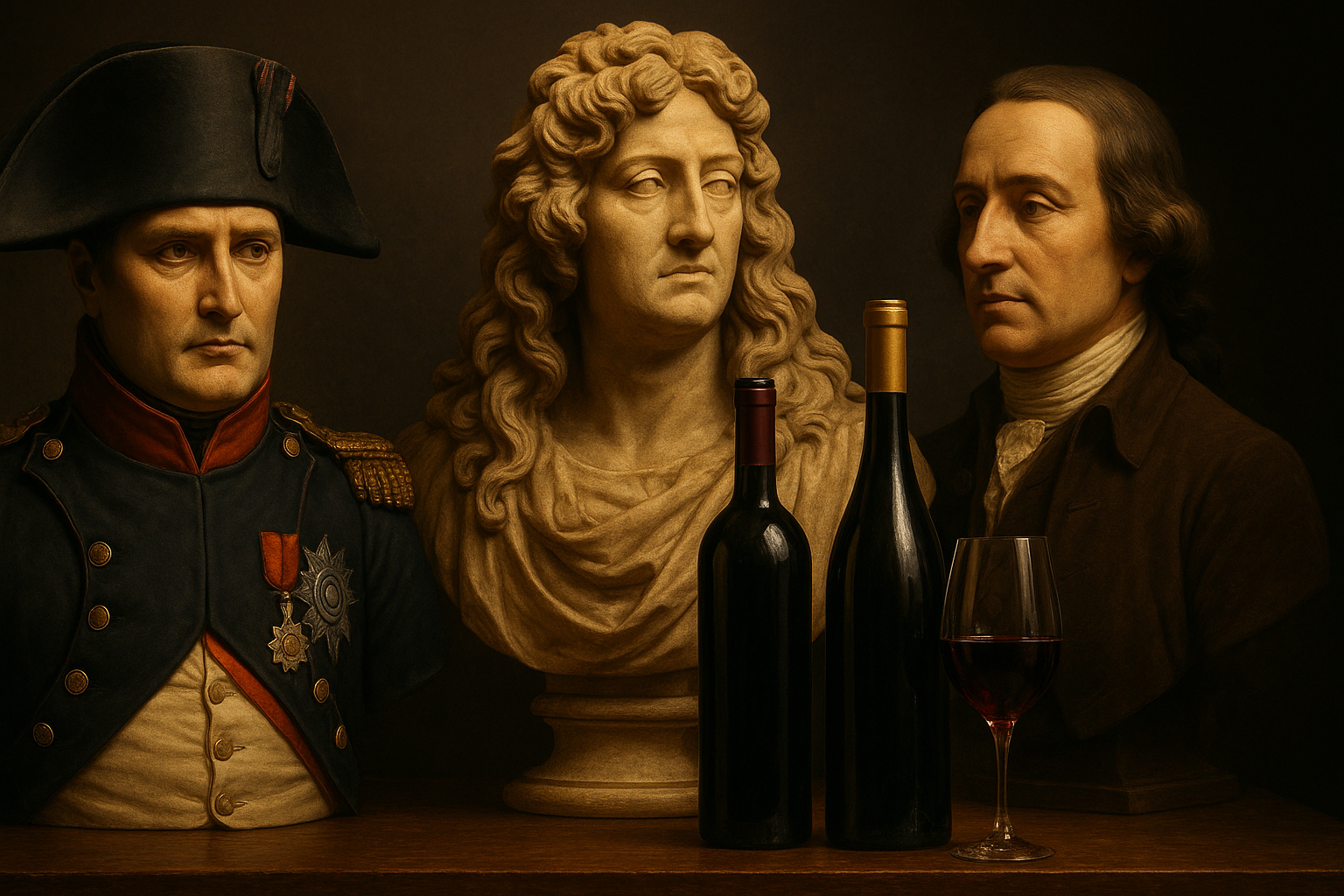
Discover which wines were adored by Napoleon, Louis XIV, and other notable French figures. The historical context from Roman times to papal Avignon shaped the elite's choices. We unveil the secrets of prestigious regions and their influence.
Wine of the French Elite: Favorite Drinks of Notable Figures and Historical Context
France is the cradle of winemaking, where wine is not just a drink but a symbol of status, culture, and history. Notable figures from kings to emperors favored certain wines that reflected the era and regional traditions. This article will immerse you in the world of French wines, reveal the preferences of the elite, and the role of historical context in shaping these tastes.
Historical Origins of French Winemaking
The history of French wine dates back to the 6th century BC when Greek colonists in Provence began cultivating grapes. The Romans in the 1st century BC brought systematic winemaking to Gaul, forcing local tribes to participate in the process. Over time, the Gauls loved wine more than traditional brie.
In the Middle Ages, monasteries, especially Cistercian ones, played a key role. They established vineyards in Burgundy, Bordeaux, and the Loire — regions still considered prestigious. For example, the Pontigny Abbey was the first to produce Chardonnay wine, and Clos de Vougeot became legendary.
The papacy's move to Avignon in 1305 elevated the reputation of French wines. Pope Clement V popularized them, and Petrarch lamented the absence of Burgundy wines in Rome. Trade with the Dutch spread white varieties like Melon de Bourgogne in the Loire.
Prestigious Regions and Their Wines
The French elite chose wines based on terroir — a unique combination of soil, climate, and traditions. Here are the key regions:
- Bordeaux: The oldest region with red wines from Cabernet Sauvignon, Merlot. Famous châteaux: Lafite-Rothschild, Margaux, Mouton-Rothschild, Haut-Brion. Appellations: Médoc, Saint-Émilion, Sauternes.
- Burgundy: Elegant Pinot Noir and Chardonnay. 83 appellations, including Chablis. Pinot Noir variety — over 2000 years of history.
- Champagne: The only region of true champagne with Pinot Noir, Chardonnay, Pinot Meunier.
- Provence: Rosé wines from Grenache, Syrah. The oldest region from the 6th century BC.
- Alsace: White wines: Riesling, Gewürztraminer, Pinot Noir.
- Rhone and Loire Valleys: Powerful Syrah, Gamay, Sauvignon Blanc.
Favorite Wines of Notable French Figures
The French elite drank wines that symbolized power and sophistication. Although exact preferences varied, historical context dictated the choice.
Louis XIV, the Sun King (1638–1715)
Louis XIV, a patron of the arts, preferred Bordeaux and Champagne wines. Château Haut-Brion — the first classified Bordeaux wine — was served at Versailles. His court enjoyed sparkling wines, precursors to champagne, which suited lavish banquets. Historical context: the rise of absolutism elevated Bordeaux as a symbol of luxury.
Napoleon Bonaparte (1769–1821)
Napoleon adored Chambertin from Burgundy — a powerful Pinot Noir wine he drank before battles. He said: "In Burgundy — the wine of heroes." He also loved Champagne for toasting victories. Context: military campaigns popularized portable, robust Burgundy wines.
Charles de Gaulle (1890–1970)
The president preferred Bordeaux, particularly Château Mouton Rothschild. In his time, the 1855 classification reinforced Médoc's status. De Gaulle associated wine with French identity.
Voltaire and the Enlightenment
Philosopher Voltaire loved champagne and Alsatian Rieslings for their freshness. In the 18th century, the elite drank Sauternes — sweet whites from Bordeaux, a symbol of the Enlightenment era.
Writers and Artists: Hugo, Balzac
Victor Hugo preferred Loire wines (Vouvray from Chardonnay). Honoré de Balzac described Bordeaux in his novels, drinking it daily. Pablo Picasso loved Provençal rosés.
How History Influenced the Elite's Choice
Historical context shaped the elite:
- Roman Era: Initiated the culture, the Gauls adopted it from the Romans.
- Middle Ages: Monasteries standardized quality, the elite drank Burgundy.
- Papal Avignon: Export to Italy raised prestige.
- Anglo-French Wars: Bordeaux oriented towards Britain, became elite.
- Revolution and Napoleon: The 1855 classification in Bordeaux fixed the hierarchy.
- 20th Century: The AOC system guaranteed origin, the elite chose premiums.
The elite avoided simple wines, preferring appellations. Wine accompanied cheese, bread — traditional food.
Modern Echo of Traditions
Today, the French elite drinks the same classics: Bordeaux for dinners, Champagne for toasts, Burgundy for meditations. Sparkling wines are the most popular. Terroir remains key, as in Roman times.
French wine is not just a taste, but the history of nations. Try Napoleon's Chambertin or Louis's Haut-Brion — and feel the elite of the past.








Comments (0)
No comments yet. Be the first to comment!
Leave a Comment