

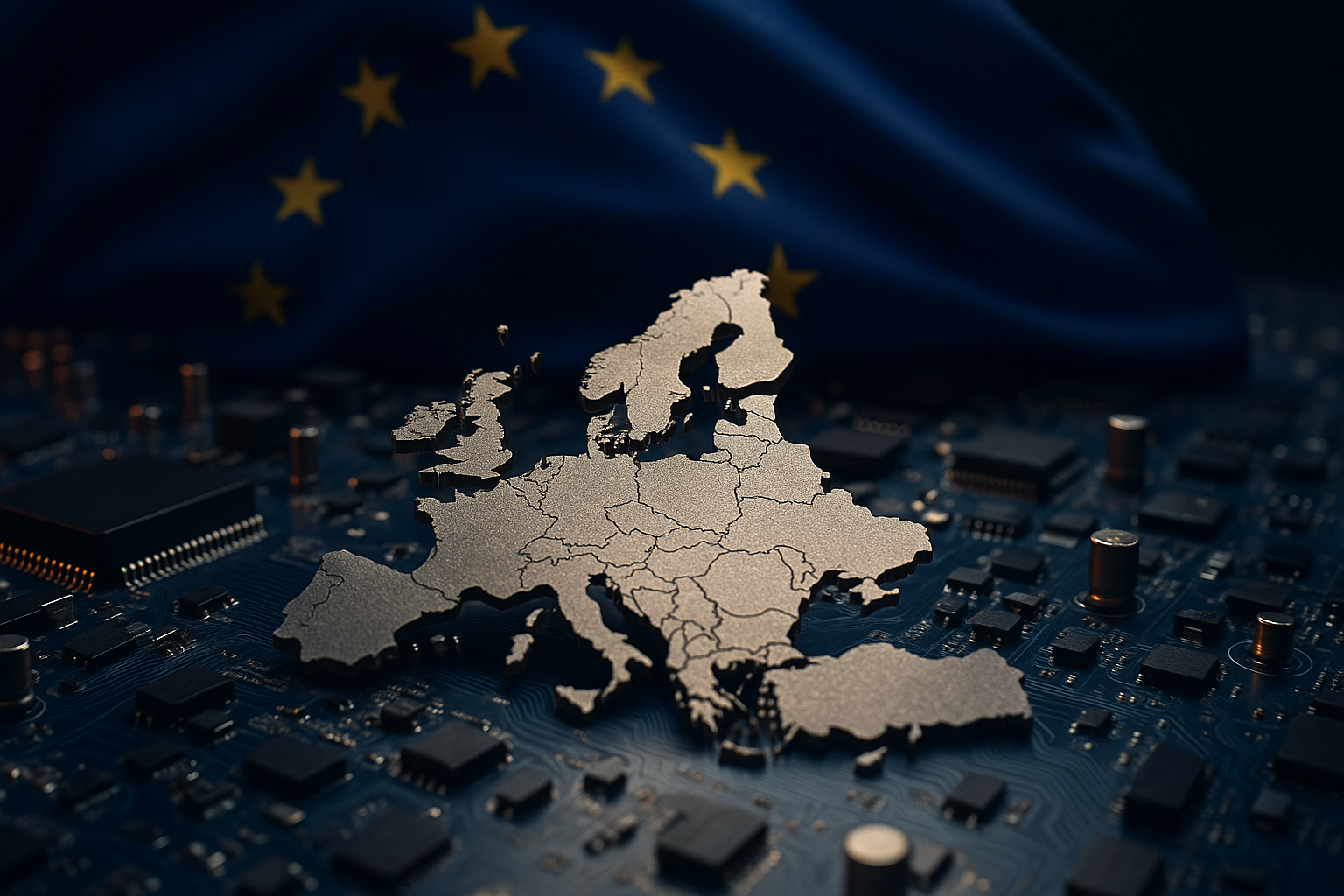
The European Union introduces revolutionary 'Made in Europe' regulations, requiring up to 70% European components in key technologies. Goal: to strengthen the EU industry against Chinese dominance. Discover the details of the Industrial Accelerator Act.
New "Made in Europe" rules are a breakthrough in the European Union's industrial policy. In the face of growing competition from China, the EU is focusing on local production, requiring a minimum of 70% European components in publicly funded strategic technologies. This article analyzes the key elements of the proposed Industrial Accelerator Act, its implications, and controversies.
Origins and goals of the new regulations
The European Union has been struggling with the loss of industrial advantage for years. Countries like China benefit from lower energy costs, less stringent regulations, and massive subsidies, allowing them to dominate sectors such as batteries, renewable energy, and electric vehicles. In response, the European Commission proposes the Industrial Accelerator Act, which aims to ensure that public money—over 2 trillion euros annually on public procurement—supports European industry.
The act, published on March 4, 2026, after months of delays, changes the EU's economic doctrine. As stated by Industry Commissioner Stéphane Sejourne: "This is more than a change in procedures—it's a change in doctrine." The main goal: to increase the share of industrial production in the EU's GDP to 20% by 2035 (from 14% in 2024).
Key sectors and 70% local content requirements
The regulations apply to strategic sectors: batteries, renewable energy (solar, wind), hydrogen, nuclear energy, electric vehicles (EV), steel, cement, and aluminum. For products benefiting from subsidies or public procurement, minimum thresholds for European components have been introduced.
- Electric vehicles: Assembly in the EU, at least 70% of components (excluding batteries) must be sourced from Europe.
- Solar panels: Specified components must be from the EU within a year, with increasing requirements.
- Batteries, hydrogen, nuclear energy: Similar rules for minimum European content.
- Steel, cement, aluminum: Minimum European share in low-carbon products for infrastructure.
These rules aim to create stable demand for European low-carbon products and protect against Chinese oversupply.
Definition of "Made in Europe" – a compromise with the principle of reciprocity
The definition of "Made in Europe" includes the European Economic Area (EEA), but with the prospect of extending to trusted partners on a reciprocity basis. Countries offering equal access to their public funds (e.g., agreements with the EU) may be included. Others, like Canada preferring local producers, will remain outside unless they change their policy. This is a negotiating tool in trade—raising concerns among partners like Turkey, the UK, or Japan. Germany proposed a broader "Made with Europe," but the compromise prevailed. Exceptions are provided for global shortages and price variations.
Conditions for foreign investments
The act introduces strict screening of foreign investments over 100 million euros in strategic sectors. This applies to investors from countries controlling more than 40% of global production capacity (hidden target: China). To pass the investment, a foreign investor must meet 4 out of 6 conditions:
- Employ at least 50% of employees from the EU.
- Not hold more than 49% shares in a European company.
- Transfer technological know-how (IP licensing).
- Others: limit majority stakes, local value added.
This is to prevent situations where Chinese companies build factories in the EU, employing mainly Chinese workers without real value transfer.
Support and controversies
Supporters: France and European industry support the plan, seeing it as protection against unfair competition. Experts like Neil Makaroff from Strategic Perspectives emphasize: "EU taxpayers' money should strengthen Europe's industrial base, not subsidize Chinese oversupply."
Critics: Sweden, the Czech Republic, and Germany fear price increases, investment outflows, and conflict with the spirit of free trade. Niclas Poitiers from Bruegel suggests alternatives: anti-subsidy investigations.
| Aspect | Support | Criticism |
|---|---|---|
| Goal | Strengthening the EU vs. China | Too protectionist |
| Scope | Strategic sectors | Limits investments |
| Definition of Europe | Reciprocity | Too narrow |
Implications for the economy and the future
The new rules may accelerate the decarbonization of industry and the development of green technologies in the EU. By ensuring demand for local low-carbon products, the act supports climate goals and competitiveness. Companies must adapt supply chains—this is an opportunity for European suppliers but a challenge for those dependent on imports.
The project requires approval from member states and the European Parliament. If implemented, it will change the landscape of investment and production in the EU, making Europe self-sufficient in key technologies.
In the context of global trade tensions, "Made in Europe" is a strategic move towards industrial sovereignty. Will it prove successful or be protectionism hindering growth? Time will tell, but one thing is certain: the EU no longer wants to be a hostage to foreign supplies.






Comments (0)
No comments yet. Be the first to comment!
Leave a Comment