

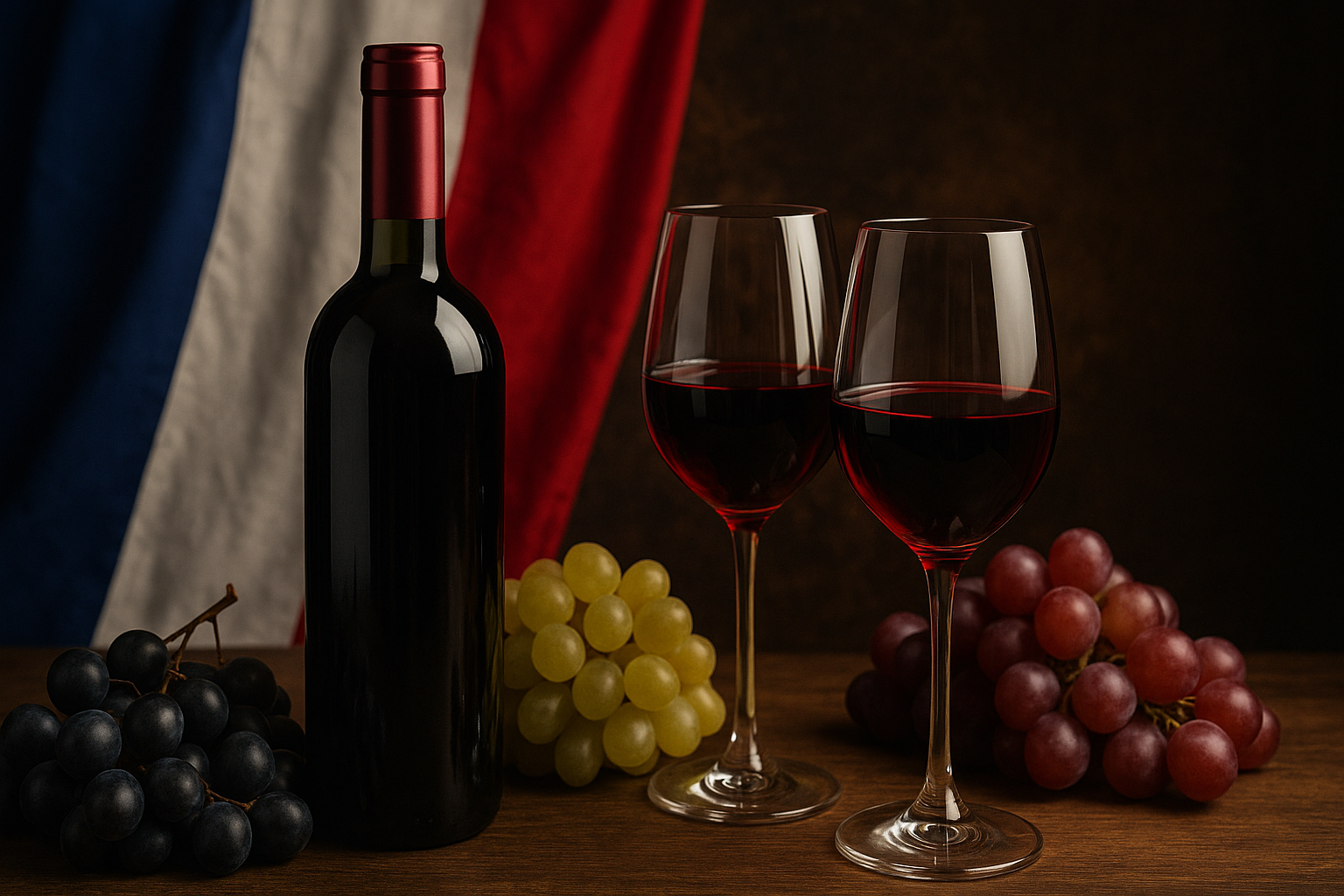
France is not just Chardonnay and Cabernet. We explore lesser-known indigenous varieties that are already shaping a new wave of the French wine trend.
When it comes to French wine, most people immediately think of Chardonnay, Sauvignon Blanc, Cabernet Sauvignon, or Pinot Noir – classics familiar to every wine enthusiast. But beyond this "big list," there is a whole world of local, historical, often nearly forgotten grape varieties that are experiencing a true revival today.
These indigenous varieties are the key to understanding the modern trend of terroir, authenticity, and diversity. They provide winemakers with a unique tool for creating distinctive wines, and consumers with the chance to discover new styles and flavors beyond the mainstream.
Why France's indigenous varieties are becoming trendy
The French naming system traditionally focuses not on the variety but on the region: labels often mention Burgundy, Languedoc-Roussillon, Loire, etc., rather than specific grapes. Historically, this has promoted the unification of styles but at the same time "hid" dozens of local varieties behind the appellation name.
Today, the situation is changing. There is growing interest in wines with low intervention, organic and biodynamic practices, as well as regional identity. Against this backdrop, winemakers are reviving local varieties that are better adapted to the climate and provide a unique profile, different from global "superstars" like Chardonnay or Merlot.
Savoie: Jacquère, Mondeuse, and Altesse – mountain character in a glass
Jacquère – the mineral voice of the Alps
Jacquère is an indigenous white variety from Savoie, rarely found outside this alpine region. Its main area is the slopes around Lake Geneva and the mountain terraces of Savoie.
- Wine style: very dry, light, with high acidity and pronounced minerality.
- Aromatics: green apple, lemon, fresh grass, sometimes chalk and wet stone.
- Pairing: an ideal wine for fondue, raw milk cheeses, and mountain cuisine.
Why it's trendy: Jacquère perfectly fits the modern demand for low alcohol, freshness, and drinkability. Against the backdrop of rich oaked whites, it appears as a breath of alpine air – honest, restrained, and very gastronomic.
Mondeuse – red with a cold climate character
Mondeuse is an ancient red variety from Savoie, long overshadowed by more famous French reds. Today, it is often compared to the best cold-climate varieties due to its spicy and berry nature.
- Wine style: medium-bodied, high acidity, pronounced tannins.
- Aromatics: blackberry, blackcurrant, violet, white pepper, sometimes smoky notes.
- Potential: the best examples develop well in the bottle, revealing complex spicy nuances.
Why it's trendy: Mondeuse offers a style that combines freshness, spiciness, and structure, which is highly sought after among lovers of "northern" red wines. It fits organically into the category of wines for light meat dishes, game, and aged cheeses.
Altesse – another white alpine insider
Altesse (also Roussette) is another indigenous variety from Savoie, producing more structured and potentially age-worthy white wines than Jacquère.
- Style: from dry to off-dry, with good acidity and greater concentration.
- Aromatics: pear, quince, honey, almond, white pepper; with age – nutty and honey tones.
Why it's trendy: Altesse answers the demand for serious, structured white wines from a cool climate that do not mimic Chardonnay. For sommeliers, it's a tool to surprise guests with an unusual combination of richness and alpine freshness.
Languedoc and the South: local varieties beyond the "international" mix
Languedoc-Roussillon is traditionally associated with mass production and blends of Grenache, Syrah, Carignan. But the region is one of the leaders in reviving local varieties that withstand heat and drought well.
Piquepoul – Mediterranean freshness
Piquepoul Blanc is an ancient variety from Southern France, today particularly known for the Picpoul de Pinet appellation near the Mediterranean Sea.
- Style: very dry, refreshing white wines with high acidity.
- Aromatics: lime, lemon, white grapefruit, sea salt, sometimes anise.
- Pairing: a classic partner for oysters and coastal seafood.
Why it's trendy: Piquepoul is a natural alternative to "New World" Sauvignon Blanc. It demonstrates how a local variety can express marine terroir while remaining affordable.
Terret and other forgotten whites of Languedoc
Terret (Terret Blanc/Gris) is a traditional Languedoc variety now coming back into focus due to its ability to produce fresh, dry wines even in a hot climate.
- Style: light to medium-bodied, with restrained aromatics.
- Aromatics: citrus, white stone, herbs, sometimes a salty note.
Why it's trendy: Terret fits perfectly into the wave of "food wines", where the focus is not on bright aromas but on texture and the ability to complement a dish without dominating it.
Loire and Bordeaux: indigenous beyond Cabernet and Merlot
The Loire and Bordeaux regions are associated with world-famous varieties – Sauvignon Blanc, Cabernet Sauvignon, Merlot. However, in their "background," there are several local varieties that are becoming the hallmark of small winemakers today.
Pineau d'Aunis – spicy red from the Loire
Pineau d'Aunis is a historical Loire variety long used for simple local wines. Now it is actively being revived by proponents of natural winemaking.
- Style: light to medium reds, often with reduced extraction and minimal oak.
- Aromatics: white and black pepper, strawberry, cranberry, sometimes smoked tea.
- Formats: still, slightly sparkling, or semi-sparkling styles – a favorite segment of "wine bars."
Why it's trendy: Pineau d'Aunis is the ideal hero for wine bars, where they seek light, spicy, drinkable reds with a distinct personality. It cools well and works as a "red for summer."
Grolleau – lightness and brightness in rosé
Grolleau is another Loire variety traditionally used for rosé wines. Once considered "simple" and intended only for the mass market, a new generation of winemakers is rethinking its potential.
- Style: light, fruity rosé and reds with low alcohol.
- Aromatics: raspberry, strawberry, red currant, sometimes candy notes.
Why it's trendy: Grolleau provides ultra-drinkable wines that perfectly meet the urban audience's demand for informal, relaxed wine consumption – at a picnic, in a bar, with street food.
How these varieties fit into global wine trends
1. Return to terroir
Indigenous varieties are the "language" by which a region speaks to the consumer. Unlike universal varieties, they allow you to "read" the place – climate, soil, traditions. That's why Jacquère or Pineau d'Aunis are more interesting in terms of identity than just another label with "Chardonnay."
2. Climate adaptation
Many local varieties have historically been selected for their ability to withstand the very conditions that are now intensifying – heat, drought, sharp temperature fluctuations. For southern France, this means a logical transition from international varieties to those like Piquepoul or Terret, which maintain acidity even in hot years.
3. A new tool for sommeliers and marketing
For the professional community, indigenous varieties provide a strong storytelling effect. A wine list that includes Jacquère, Mondeuse, Pineau d'Aunis, or Grolleau alongside well-known AOCs becomes much more interesting for the curious guest. And for wine shops, it's a way to differentiate – offering wines "for discovery," not just "another Cabernet."
How a professional blog can work with the topic of indigenous varieties
For a wine or gastronomic blog, France's indigenous varieties are an inexhaustible source of content. Here are a few approaches to presenting the topic:
- Regional material series. Separate articles about Savoie, Loire, Languedoc focusing on local varieties, not just famous appellations.
- Comparative tastings. The format "Chardonnay vs. Jacquère," "Pinot Noir vs. Mondeuse" to show readers how differently a cold climate can sound.
- Food pairing with local cuisine. Pairing Jacquère with fondue, Piquepoul with oysters, Pineau d'Aunis with game or fermented cheeses – an opportunity to talk about both wine and the region's gastronomy.
- Winemaker stories. Interviews with those who consciously abandoned international varieties in favor of indigenous ones – a strong tool for emotional audience engagement.
The trend towards France's indigenous varieties is not a short-lived fashion but a deep movement towards diversity and respect for terroir. For a professional wine blog, it's a chance to be a step ahead, showing readers not only what's already in glasses worldwide but also what's about to become the new classic.








Comments (0)
No comments yet. Be the first to comment!
Leave a Comment