

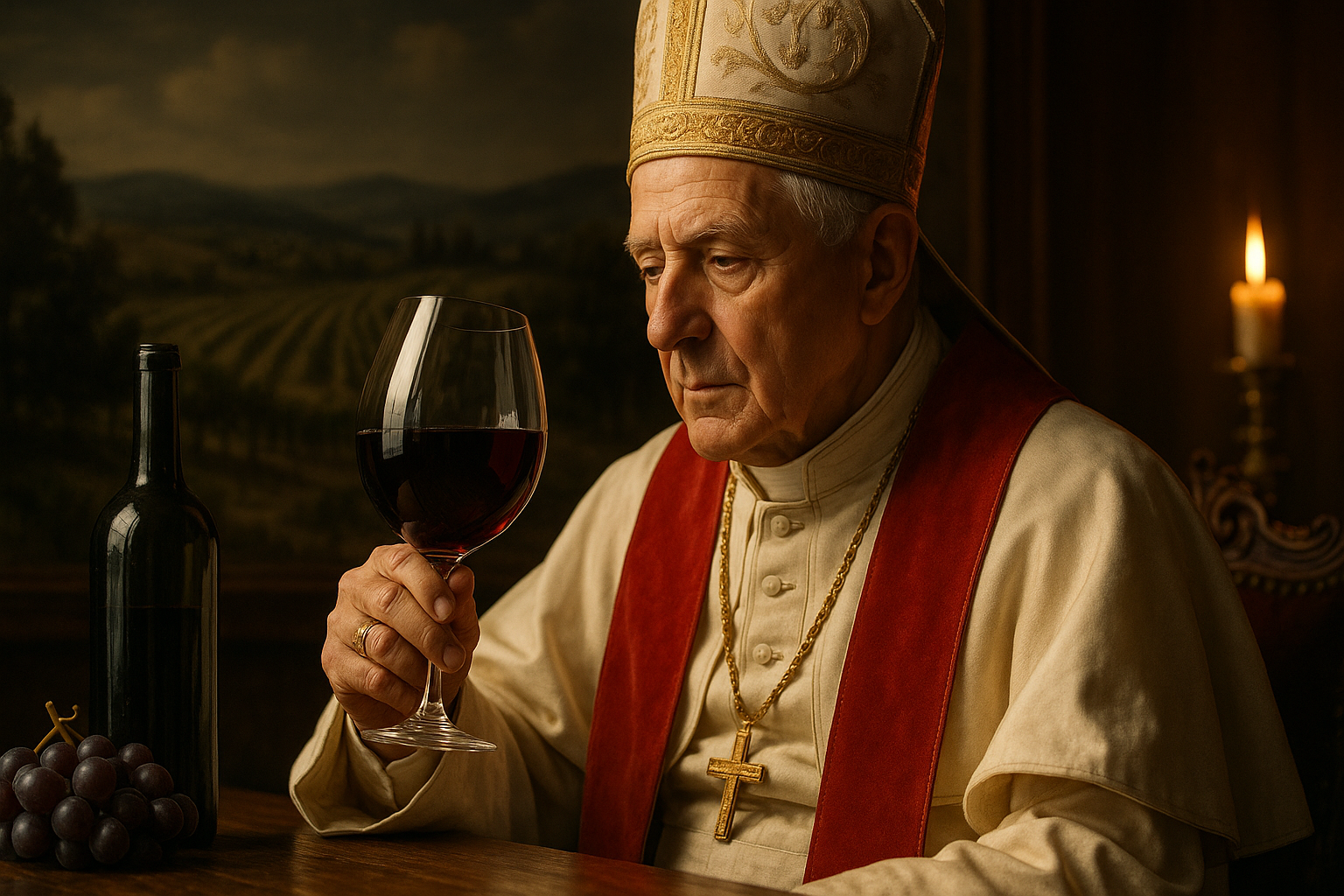
From monastic vineyards to papal chalices: how the personal preferences of pontiffs changed the map of European winemaking.
The history of European winemaking is unimaginable without the Vatican. For centuries, the papal court not only consecrated wine for liturgy but also shaped tastes, fashion, and the economy of wine regions. Behind every glass on the papal table stood politics, theology, and the very human preferences of specific pontiffs.
Wine between the altar and the table
In Catholic tradition, wine is not just a drink but a liturgical symbol deeply rooted in the Gospel. However, alongside its theological significance, there was also a very earthly dimension: popes always remained people with their own gastronomic weaknesses, and wine preferences often reflected the era.
Modern Pope Francis directly called wine a "gift from God" and "true joy of life," emphasizing that Christianity is not about sad asceticism but about grateful and responsible acceptance of God's gifts.
Papal glasses as a driver of the wine economy
The Vatican's demand historically created a real economic "lift" for certain wines. If a wine made it to the papal table, it automatically elevated its status throughout Catholic Europe: bishops, monasteries, and secular courts tried to emulate Rome.
This applied not only to the great wines of France or Italy – often local, almost unknown varieties gained a chance for fame when chosen by a specific pontiff.
Medieval and Renaissance origins: when monks were winemakers
In the Middle Ages, the main wine producers were monasteries. The papal courts demanded quality wine for mass – this stimulated the development of viticulture at the abbeys of Burgundy, Champagne, Lazio, and Tuscany. Popes, as the pinnacle of the church hierarchy, indirectly set standards for the entire Catholic world.
The era of the Avignon Papacy (14th century) was particularly indicative when the Popes resided in southern France. It was then that vineyards around Avignon actively developed, which later gave life to the famous Rhône appellations. Papal orders ensured stable sales and a high standard of quality.
Personal tastes of pontiffs: from Vernaccia to Bordeaux
Not all Popes were gourmets, but many left a "wine trail" in history. Their gastronomic preferences are often well documented – sometimes through cookbooks, sometimes through the memoirs of courtiers.
Wine as a sauce to power: Vernaccia and Lake Bolsena
Historians of the papal kitchen recall that one of the Popes particularly loved eels from Lake Bolsena, cooked in white Vernaccia wine. This dish, popular at the court, made the local white wine not only an ingredient but also an independent brand. Wine that made it into recipes "for the Holy Father" automatically gained symbolic capital.
Ascetics and gourmets: when a glass is the limit of the permissible
Some popes were distinguished by restraint in food and drink. Some drank wine only in minimal liturgical quantities, emphasizing penance and simplicity. Others allowed themselves modest but quality wine at lunch – primarily from the nearest Italian regions.
In the 19th century, Pope Leo XIII, known for his moderation, adhered to a very modest diet but still had a habit of a glass of Bordeaux at lunch. For French winemakers, the fact that the Pope drank Bordeaux was an additional argument in prestige disputes on the international market.
Pius XII and culinary Italy on the plate and in the glass
Pius XII particularly loved traditional Italian cuisine – pasta, cheeses, peasant dishes with vegetables and a little meat. His table featured wines from Italian regions, primarily Lazio and surrounding areas. The Pope's choice emphasized the Italian identity of the Vatican and supported local producers.
For small winemakers, even indirect "sympathy" from the pontiff meant a chance to attract the attention of diplomats, pilgrims, and Roman restaurants working with the curia.
Modern Popes and wine: between media, health, and the theology of joy
John Paul II and the globalization of wine styles
Pope John Paul II traveled the world extensively and, although not publicly known as a wine gourmet, contributed to the globalization of Catholic culture, including wine. Along with pilgrimages came interaction with winemaking traditions of Central Europe, Spain, and Latin America. For many wine regions, a papal visit meant a tourist and image boost – and thus increased interest in local wines.
Benedict XVI: beer, but with a wine shadow
Benedict XVI is more often remembered as a lover of Bavarian beer – particularly the Franziskaner Weissbier variety. At the same time, as a German intellectual, he was well-versed in the wine culture of German Rieslings and Franconian wines. Although alcohol was later limited for him due to age, the very presence of the "Pope from Bavaria" in the public space drew attention to Northern European beverages, which traditionally compete with wine.
Pope Francis: "God's gift" in a glass
Pope Francis, an Argentine by origin, was shaped in a country with a strong Malbec culture. Although he rarely publicly names specific favorite wines, in his speeches, he has repeatedly emphasized the positive role of wine in Christian symbolism and the culture of joy. Recently, he called wine "God's gift" and "the true gift of life."
Such statements affect not only theological discourse but also public attitudes towards moderate alcohol consumption. For European winemakers, this is moral support for traditions that often come under pressure from a culture of excess or, conversely, radical abstinence.
How papal tastes changed the winemaking map
Papal brand: from seal to label
In different eras, wines preferred by pontiffs received an informal "papal" status. Avignon popes glorified Rhône wines; Roman ones supported Lazio, Umbria, Tuscany, and Campania; the sympathies of individual Popes for Bordeaux or Burgundy wines echoed in the secular courts of Europe.
In the 20th century, when modern wine marketing was formed, references to the Vatican became more subtle but did not disappear: Roman restaurants serving the curial public actively promoted both Italian DOC/DOCG and authoritative French wines served at diplomatic receptions.
European wine map under the influence of the Vatican
- Italy: Lazio, Tuscany, Umbria have had a privileged position for centuries due to their proximity to Rome and constant demand from the curia.
- France: during the Avignon Papacy and through the sympathies of individual pontiffs for Bordeaux and Burgundy, along with monastic winemaking, the myth of "wine for kings and popes" was formed.
- Central and Eastern Europe: pilgrimages, diplomacy, and pontifical visits helped bring local wines out of the shadows, creating a bridge between the Western European market and local traditions.
Wine-loving Popes today: ethics, ecology, and moderation
Modern Popes increasingly speak not about specific wines but about responsible attitudes towards the created world. The ecological theme, actively raised by recent pontiffs, directly concerns viticulture: responsible land use, seasonal workers' labor, and the fight against excessive chemicals in winemaking.
Moderate consumption, respect for traditions, care for the world created by God – all this forms a new perspective in which a glass of wine on the papal table is not so much a sign of luxury as a symbol of a culture of gratitude and responsibility.
Conclusion: what papal glasses tell us
The history of papal wine preferences is a way to look at the Catholic Church without stereotypes. Pontiffs who loved simple peasant food with a glass of local wine, ascetic Popes who limited themselves to the minimum, and modern pastors who speak of the "gift of God" in wine – all of them, in their own way, influenced the fate of European winemaking.
For winemakers, it's a reminder: behind great styles and appellations stand real people, their tastes, memories, and faith. And for the reader – an invitation to look at a glass of wine not only as a gastronomic pleasure but as part of a great cultural, spiritual, and historical story in which wine-loving Popes played a much larger role than it might seem at first glance.








Comments (0)
No comments yet. Be the first to comment!
Leave a Comment