

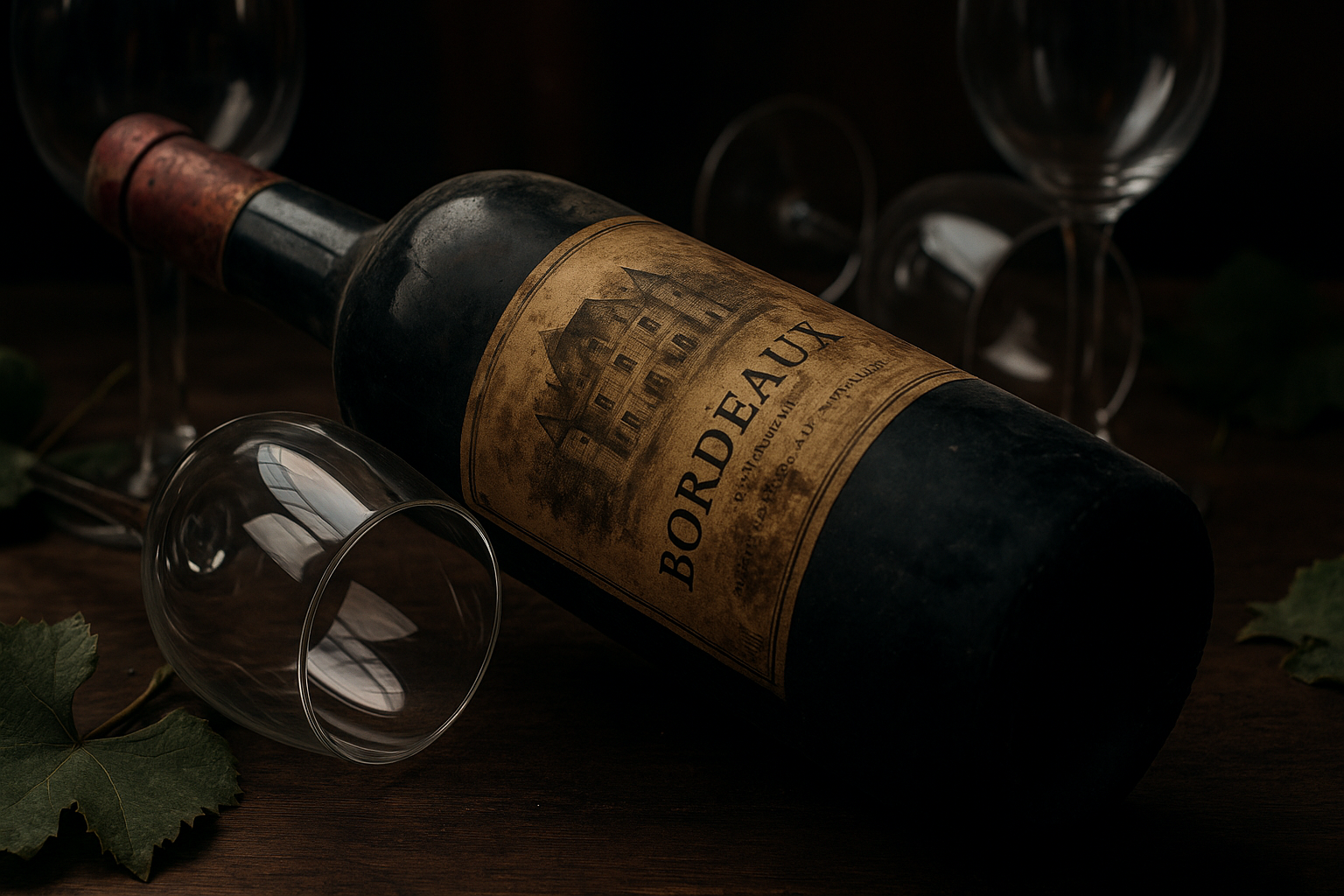
Not every Bordeaux wine is equally good. Let's figure out which years are considered unsuccessful, how they spoil the taste, and when it's worth refraining from buying.
Bordeaux has long become synonymous with great wine, but even in this legendary region, not every year produces masterpieces. The climate is capricious, rains and heat come at the wrong time, resulting in so-called unfavorable years – harvests that yield mediocre or outright weak wines. For a connoisseur, this is not just a theoretical question: knowing the "unsuccessful" vintages helps avoid disappointments and not overpay for the "Bordeaux" label.
What is an "unfavorable year" in Bordeaux
The concept of an "unfavorable" or "unsuccessful" year in Bordeaux is directly related to the concept of vintage – the year of the grape harvest from which the wine is made. Even with the same terroir and winemaking approaches, the quality of wine heavily depends on the weather conditions of a particular year.
- Successful years – weather conditions are almost ideal, most chateaux receive excellent wine material, and collectible wines are born from the best plots.
- Average years – the weather is not catastrophic but unstable; good wines are made only by the best producers.
- Unfavorable years – rains, cold, or excessive heat during critical phases of grape vegetation and ripening sharply reduce the quality of the harvest.
In unsuccessful years, wine often turns out watery, with insufficient concentration, "green" tannins, and a weak aroma. Even with the winemaker's efforts, the raw material sets a quality limit that cannot be surpassed.
Why Bordeaux is so dependent on the year
The climate of Bordeaux is warm but humid, heavily influenced by the Atlantic. On one hand, these are ideal conditions for growing grapes for Bordeaux blends, but on the other, frequent and sometimes prolonged rains become a real challenge.
Climatic risks
- Excessive rains before or during harvest "dilute" the berries, saturating them with water, reducing sugar content and concentration of aromatic substances.
- Cold spring can damage young shoots and reduce the harvest, as well as shift ripening phases.
- Prolonged heat without rain threatens stress for the vines and uneven ripening, especially on light soils.
Due to such weather variability, Bordeaux has become a "blending laboratory": winemakers combine different varieties (Cabernet Sauvignon, Merlot, Cabernet Franc, Petit Verdot, Malbec) to extract maximum quality even in weak years. But in a truly unsuccessful year, even blending does not save the situation.
How to recognize an unsuccessful year: what to look for as a buyer
Professional guides and wine directories often mark years with symbols or ratings – from "excellent for all vineyards" to "unsuccessful, with some good wines." When choosing Bordeaux, it is worth considering several criteria.
1. Reputation of the vintage year
For Bordeaux, there are generalized lists of successful and problematic years. For example, the best for modern collections often include 2000, 2003, 2005, 2008, 2009, 2010, 2015, 2016 – they are regularly mentioned as years with great potential and high critic ratings. If you see an inexpensive Bordeaux from a recognized great year – that's a plus. If the year is known as weak or controversial, the risks increase sharply.
2. Style and price of the wine
- Cheap wines from unsuccessful years – the riskiest category: the producer has fewer opportunities for selection and barrel work, so all the harvest's shortcomings are openly manifested.
- "First-tier" wines (old vines, top chateaux) usually show an acceptable level even in a weak year, but still fall short of themselves from great vintages.
If your budget is limited, the logic is simple: better an inexpensive Bordeaux from a good year than a "prestigious" chateau from a bad harvest in the minimum price category.
3. Taste characteristics
Wines from unfavorable years often reveal themselves in the glass:
- thin body, lack of concentration;
- "green" astringency – harsh, unripe tannins, herbal notes;
- simple aroma without depth, dominance of sour red berries without development;
- noticeably unbalanced acidity, making the wine sharp.
In contrast, in successful years, Bordeaux is renowned for its balanced acidity, powerful yet noble tannins, and complex bouquet – from dark fruits to notes of tobacco, vanilla, spices.
Why you should avoid wines from unsuccessful years
Ignoring the vintage year factor can cost you not only money but also the pleasure of wine. There are several key reasons why professionals advise caution with Bordeaux from unfavorable years.
1. Low price-to-quality ratio
The "Bordeaux" label itself adds to the price, but in unsuccessful years, the content often does not match the cost. For the same money, you can purchase:
- Bordeaux from a better year but a less renowned chateau;
- excellent wines from other regions of France or the world where the year was more favorable.
This is why many experts advise, when buying inexpensive Bordeaux, to first look at the vintage year rather than the notoriety of the name.
2. Weak aging potential
Bordeaux's reputation as a wine that ages beautifully is based on the combination of tannins and acidity. Wines from great years (2005, 2009, 2010, 2015, 2016) can develop for decades, gaining complexity and depth over time. In weak years, the balance is disrupted: either there is not enough concentration, or the acidity is too coarse. Such wines usually do not improve over time but rather "decline" – losing fruit, becoming thin and sour.
3. Higher risk of defects and imbalance
Unfavorable weather conditions not only affect taste but also increase the risks of fungal diseases, rot, and berry sanitation problems. In the budget segment, this more often leads to:
- dirty, musty aromas;
- unstable balance – the wine is either too thin or sharp and aggressive;
- quick fatigue of the wine in the glass – it "falls apart" in minutes.
How to deal with unfavorable years in practice
1. Learn to read the "harvest calendar"
It is useful to have a Bordeaux year table with brief characteristics at hand – they are now easy to find in directories and online resources. They immediately show which years were excellent, good, average, or unsuccessful for red, white dry, and sweet wines.
- If the year is marked as "excellent" or "very good" – feel free to choose even not too expensive chateaux.
- If the year is marked as "average" – it is worth focusing on reputable estates and reviews.
- If "unsuccessful" – avoid the budget segment, and buy expensive wines only after tasting or based on reliable critic ratings.
2. Adjust expectations
If you still buy Bordeaux from a problematic year (gift, curiosity, good price), it is worth immediately lowering expectations. Do not expect a multidimensional aroma and long aftertaste like from top vintages. Such wine is better perceived as a simple everyday accompaniment to food rather than an object of meditative tasting.
3. Consider alternatives
In unfavorable years for Bordeaux, a good strategy is "wine tourism on the world map": somewhere in the same year, the climate was perfect. It might be worth paying attention to other French appellations or the New World instead of insisting on Bordeaux.
Conclusion: the year on the label is your best filter
Bordeaux is one of the brightest examples of how the vintage effect determines the fate of wine. In some years, the region gives the world legends, in others – a struggle for acceptable quality. To avoid spending money on disappointment, it is worth making a simple habit: before buying Bordeaux wine, always check the vintage year, refer to authoritative lists of successful and unsuccessful vintages, and be especially cautious with inexpensive wines from problematic years.
Then Bordeaux will appear to you in the form for which collectors love it: with depth, character, and the ability to age beautifully – not as a random drink with a loud geographical name on the label.








Comments (0)
No comments yet. Be the first to comment!
Leave a Comment