

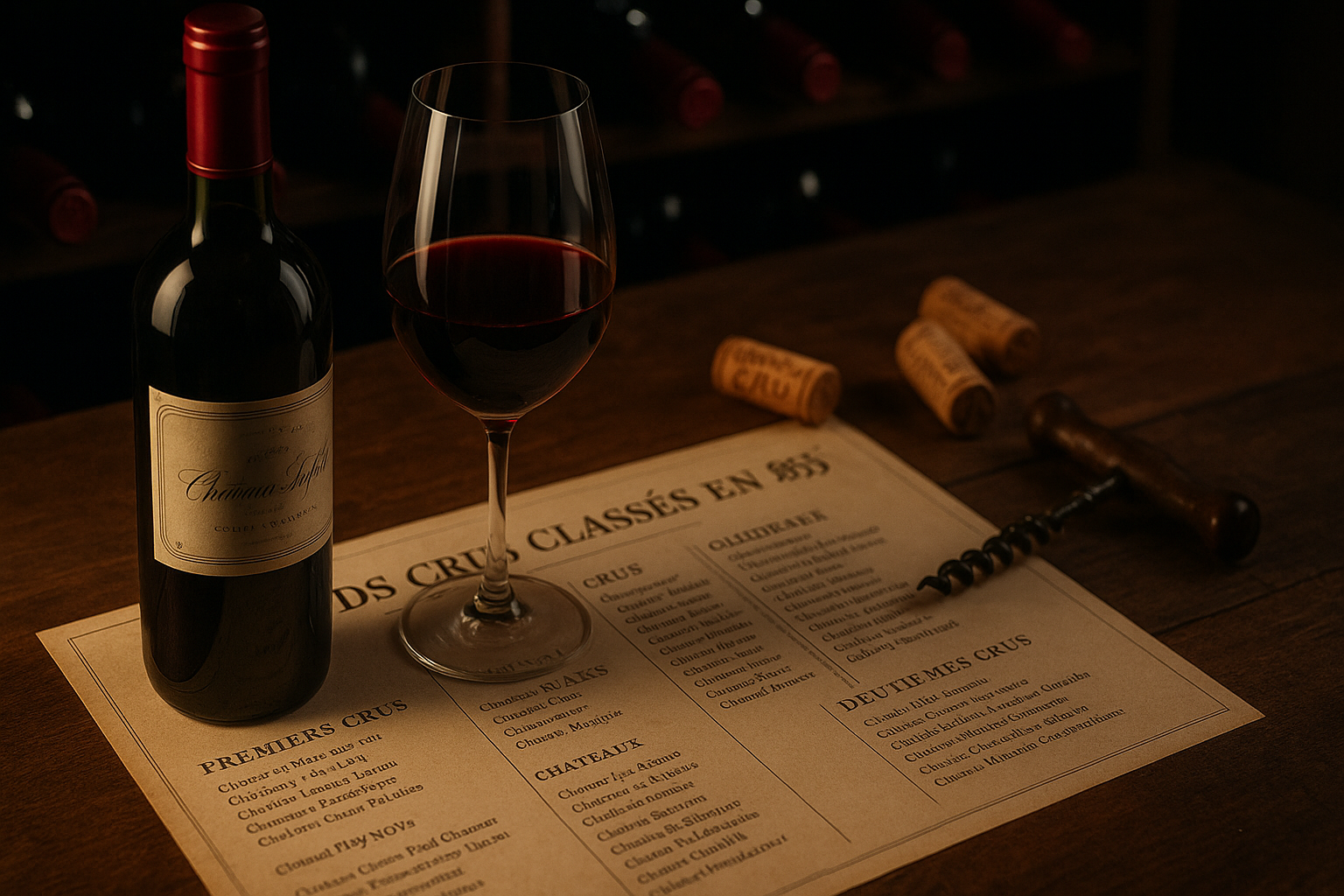
How the legendary 1855 Médoc wine classification works, why it has hardly been changed, and what place it holds in the modern wine world.
The 1855 Médoc Wine Classification is one of the most influential documents in the history of winemaking. It still shapes the perception of Bordeaux's prestige and determines the value of many châteaux on the market, despite being created over 170 years ago for the Paris World Exhibition.
How the 1855 Médoc Classification Came About
In 1855, Emperor Napoleon III was preparing France for the World Exhibition in Paris and asked the Bordeaux Chamber of Commerce to compile a list of the region's best wines. The task was purely practical: to showcase the elite of Bordeaux châteaux to the world in a clear, hierarchical form.
Brokers from the Médoc wine trade, who had been trading these wines for decades and knew the market well, were involved in the classification. The main criterion was not blind tasting, but the market price of the wine, which was considered the best reflection of its quality and reputation at the time.
What Was Classified in 1855
The 1855 classification covered:
- red wines from the left bank of the Gironde – primarily the Médoc region, plus one château from Graves;
- sweet white wines from Sauternes and Barsac.
For red wines, 57 châteaux were selected and divided into five tiers – from Premier Cru (first growths) to Cinquième Cru (fifth growths). For the sweet white wines of Sauternes and Barsac, three levels were determined, with a special status for Château d’Yquem as the only Premier Cru Supérieur.
The Five Levels for Médoc Red Wines
The official 1855 Bordeaux wine classification established the following hierarchy of châteaux for red wines:
- Premiers crus – "first growths," the highest level of quality and prestige.
- Deuxièmes crus – "second growths."
- Troisièmes crus – "third growths."
- Quatrièmes crus – "fourth growths."
- Cinquièmes crus – "fifth growths."
The designation Cru Classé ("classified vineyard") has since been allowed to appear on the label only for estates included in this official classification.
Why the 1855 Classification Has Hardly Changed
Unlike more flexible systems (for example, the Saint-Émilion classification, which is regularly reviewed), the 1855 list for Médoc has remained almost unchanged. Over more than 160 years, only a few adjustments have been made, with only one change considered truly significant.
The Main Change: The Promotion of Mouton Rothschild
Initially, four châteaux were included in the Premiers crus category. In 1973, after prolonged lobbying, Château Mouton Rothschild was promoted from Deuxième cru to Premier cru – this was the only instance of such a significant status revision within the 1855 classification.
Other changes mainly involved renaming, administrative corrections, or the division/merger of estates, but the structure and list of levels remained practically untouched.
Why the System Endured
- Economic Inertia: Prices of wines from classified châteaux have confirmed their market superiority for decades, reinforcing the "correctness" of the historical list.
- Marketing Capital: For Bordeaux, the 1855 classification became a powerful branding tool that is difficult to replace without risking the region's image.
- Legal and Political Complexity of Changes: Revising statuses would affect large financial interests, so every attempt at global reform faced resistance.
How the 1855 Classification Works in the 21st Century
Today, this system coexists with the modern French AOP/AOC model, as well as with other regional classifications, including those for Graves, Saint-Émilion, and categories like Cru Bourgeois and Cru Artisan in Médoc.
Relation to AOC / AOP
The modern AOC/AOP system sets rules for the entire appellation (varieties, yield, wine style, etc.). The 1855 classification, on the other hand, pertains to individual châteaux within these appellations and focuses on historically proven quality and reputation of the estate.
Wines from classified Médoc châteaux typically have AOC (now AOP) status relative to specific Bordeaux appellations, such as Médoc, Haut-Médoc, or individual communes (Margaux, Pauillac, etc.).
Neighboring Classifications in Médoc
To fill the "gaps" of the 1855 classification, which covers only part of the estates, other categories have emerged in Médoc:
- Cru Bourgeois – good quality wines positioned between "petit châteaux" and Cru Classé. They account for about a third of Médoc wine volume (according to various sources – over 300 estates, about half of the region's production).
- Cru Artisan – a classification for small family estates; not officially integrated into the 1855 system but actively seeking recognition.
These classifications help navigate the wide range of Médoc wines beyond the narrow circle of historical Cru Classé.
Advantages and Limitations of the 1855 System Today
Strengths in the 21st Century
- Clear Hierarchy. The five levels of Médoc red wines and three levels of sweet white Sauternes/Barsac provide consumers with a simple guide to prestige and expected price.
- Historical Continuity. The almost unchanged list is perceived as part of Bordeaux's cultural heritage, adding collectible value to the wines.
- Global Recognition. It is perhaps "the most important and well-known classification of any wine region in the world," maintaining its influence in international trade.
Weaknesses and Criticism
- Static Nature. The classification hardly accounts for real changes in quality: some châteaux have significantly improved winemaking, others have lost ground, but their status remains unchanged.
- Limited Coverage. It ignores the right bank of Bordeaux (e.g., Saint-Émilion or Pomerol) and most estates that did not exist or were not influential in 1855.
- Price Barrier. Classified status often automatically raises the price, distancing these wines from a broad audience, even if the quality of some Cru Bourgeois or "petit châteaux" may be comparable.
How to Read the 1855 Classification for the Modern Consumer
For a wine professional or informed amateur, the 1855 classification is not a dogma but one of the guides.
Practical Tips
- View Premier Cru and other levels as indicators of historical prestige, not guaranteed quality of each vintage.
- Compare wines not only by château status but also by vintage, style, and independent critics' ratings.
- Do not ignore Cru Bourgeois and Cru Artisan: they often offer excellent value for money, especially in good years.
- Remember other Bordeaux classifications (Graves, Saint-Émilion) and the overall AOC/AOP system, which provide additional information about the origin and style of the wine.
The Future of the 1855 Médoc Classification
In the 21st century, the wine world has become much more dynamic: new regions, international competition, climate change, the emergence of independent ratings and guides. Against this backdrop, the 1855 classification appears both an anachronism and a powerful marketing symbol.
A complete reform of the classic list is unlikely due to legal, economic, and reputational risks. Instead, the system evolves "around the perimeter" – through the development of adjacent classifications, changes in French wine nomenclature (transition from AOC to AOP), and the growing role of independent assessments that complement the historical hierarchy.
For the modern professional, the 1855 Médoc wine classification is, above all, a language of tradition that Bordeaux speaks to the world. Understanding this language allows for more confident navigation in categories, prices, and wine expectations, as well as better seeing where history harmoniously combines with current quality, and where it is worth turning to other sources of information.








Comments (0)
No comments yet. Be the first to comment!
Leave a Comment