

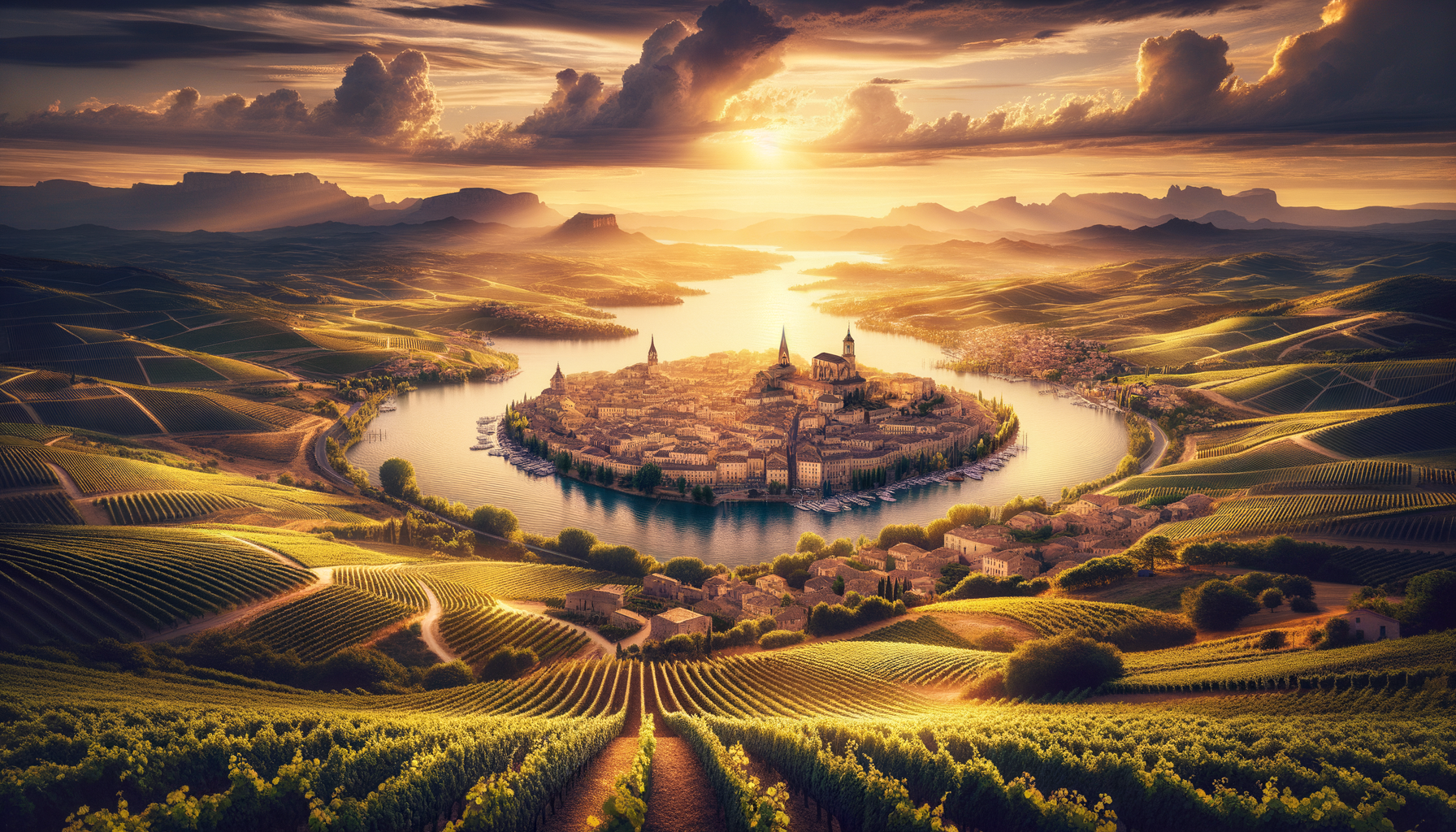
Discover the main wine regions of France – from the noble Bordeaux to the sunny Provence – in simple terms about styles, tastes, and differences.
France for the world of wine is like Paris for fashion: a reference point that everyone looks back to. Bordeaux, Burgundy, Champagne, Loire Valley, Rhône Valley, Alsace, Provence, Languedoc-Roussillon – names that flash on labels and wine lists, but behind them lie very different stories, styles, and tastes.
Below is a lively, simple guide to help you organize French wines, even if you're just starting your journey in wine.
Bordeaux: the benchmark of red wine
Bordeaux is one of the oldest and most prestigious regions, located near the Atlantic Ocean in a temperate climate. Here, chateau estates dominate – the famous "châteaux," which for generations have produced wines considered the world standard of rich red blends.
The climate is mild, with oceanic influence: lots of moisture, not too hot, relatively mild winters. The soils are diverse – gravel, clay, limestone – creating ideal conditions for long-lived red wines with good structure.
Main grape varieties: Cabernet Sauvignon, Merlot, Cabernet Franc, Malbec. Often these are blends where the varieties complement each other.
Wine style: rich, structured, with pronounced tannins (a sense of astringency), often aged in oak. In their youth, they are powerful and somewhat austere, but over time they develop into elegant, deep wines.
Taste and aromas: black currant, plum, black cherry, graphite, cedar, tobacco, spices. In aged wines, notes of leather, cigar box, and undergrowth appear.
What sets it apart: Bordeaux is about structure and blends. If you imagine a "serious red wine for steak," most likely, the image in your head is of the Bordeaux style.
Burgundy: the territory of subtle nuances
Burgundy in eastern France is a region of complex characters and subtle differences between neighboring plots. Here, terroir is of great importance: soil, exposure, microclimate – all of this strongly influences the wine style.
The climate is moderately continental: colder winters, hotter summers, more risk of frost and hail than in Bordeaux. Soils are predominantly limestone-clay, with many variations even over short distances.
Main varieties: Pinot Noir and Gamay for reds, Chardonnay and Aligoté for whites. It is here that Pinot Noir and Chardonnay show their most refined side.
Wine style: Burgundy reds are often more delicate than Bordeaux – fewer tannins, more finesse. Whites range from very mineral and strict (Chablis) to richer, buttery, with wood (Côte de Beaune).
Taste and aromas: reds – cherry, raspberry, strawberry, violet, sometimes earthy and mushroom notes with age. Whites – apple, pear, citrus, sometimes butter, nuts, honey.
What sets it apart: this is France's "wine microscope." If you're interested in catching nuances between wines from neighboring hills and savoring terroir – Burgundy is for you.
Champagne: bubbles with strict origin
Champagne in northeastern France is the only region that has the right to call its sparkling wines "Champagne." The climate here is cool, grapes ripen slowly, giving high acidity – the perfect base for sparkling wines.
Terroir – chalky soils that drain water well and retain heat, helping grapes to ripen in harsher conditions.
Main varieties: Pinot Noir, Pinot Meunier, and Chardonnay.
Wine style: classic sparkling wines, produced by the traditional method with a second fermentation in the bottle. From light, fresh, and citrusy to creamy, complex, with long aging on the lees.
Taste and aromas: green apple, lemon, white pear, toast, brioche, nuts, sometimes honey and brioche.
What sets it apart: it's about festivity, refined bubbles, and a balance of freshness and complexity. Champagne is a separate "planet" in the world of French wine.
Loire Valley: lightness, fresh acidity, and diversity
The Loire Valley is one of the large and very diverse regions. It stretches along the Loire River and includes many subzones, but is generally associated with light, fresh wines.
The climate changes from more oceanic in the west to continental inland. Soils – a mix of clay, limestone, sand, and slate.
Main varieties: for whites – Sauvignon Blanc, Chenin Blanc, Melon de Bourgogne; for reds – Cabernet Franc, Gamay, Pinot Noir.
Wine style: dry, brightly acidic whites (for example, Sauvignon from Sancerre), more structured Chenins (Vouvray), light reds and rosés, plus sparkling wines.
Taste and aromas: lemon, green apple, grass, nettle, white currant (for Sauvignon), honey, wax, yellow fruits (for Chenin Blanc). Reds – with light berry notes and a cool character.
What sets it apart: the Loire is a champion of freshness and drinkability. These are wines that are easy to drink, they don't tire, and pair well with food – especially fish, seafood, and goat cheeses.
Rhône Valley: from elegant North to spicy South
The Rhône Valley stretches from north to south, and the upper and lower parts of the region differ significantly. The north is cooler, with steeper slopes; the south is warmer, sunnier.
Main red varieties: Syrah (especially in the north), Grenache, Mourvèdre. Whites – Marsanne, Roussanne, Viognier, Grenache Blanc, Clairette, and others.
Wine style: in the North – more elegant, peppery, structured reds from Syrah (Côte-Rôtie, Hermitage). In the South – generous, warm, spicy blends based on Grenache (Côtes du Rhône, Châteauneuf-du-Pape).
Taste and aromas: black and red blackberry, prune, black pepper, Provençal herbs, lavender, olives. Whites – from aromatic and floral to creamy and structured.
What sets it apart: Rhône is about spices and Mediterranean character. If you love a note of pepper, herbs, and ripe black berries in wine – this is the place for you.
Alsace: aromatic whites with a German accent
Alsace on the border with Germany is a narrow strip of vineyards between the Vosges and the Rhine. The climate here is relatively dry and sunny, with mountains protecting from rain.
Main varieties: Riesling, Gewürztraminer, Pinot Gris, Pinot Blanc, Müller-Thurgau, and others. Most wines are white, still, and often very aromatic.
Wine style: from absolutely dry and mineral to semi-dry and sweeter, with a distinct aromatic profile. Often wines are single-varietal – the variety is indicated on the label.
Taste and aromas: citrus, peach, apricot, white pepper, lychee, rose (for Gewürztraminer), honey, spices. Acidity is usually above average, adding freshness.
What sets it apart: Alsace is a paradise for lovers of aromatic white wines. If you like when the wine "smells the whole glass" but remains fresh – pay attention to it.
Provence: the pink heart of the Mediterranean
Provence in southern France is the oldest winemaking region, where grapes were cultivated by ancient Greeks. Today, it is best known for its dry rosé wines.
The climate is warm, sunny, Mediterranean, with the influence of the sea and the Mistral wind, which helps keep vineyards dry and healthy.
Main varieties: Grenache, Syrah, Mourvèdre, Cinsault, Tibouren, as well as various white varieties (Clairette, Rolle/Vermentino, Ugni Blanc, Sémillon).
Wine style: primarily pale pink, dry, fresh, with light fruitiness and herbal notes. There are also reds, but it is the rosés that made the region famous.
Taste and aromas: red currant, strawberry, citrus, white peach, dried herbs, sometimes a light hint of salty sea.
What sets it apart: Provence is synonymous with a summer, light, "vacation" style. It's the perfect wine for a terrace, seafood, and light snacks.
Languedoc-Roussillon: a large experimental playground
Languedoc-Roussillon in southern France is the largest vineyard area in the country. It was long known as a "mass wine factory," but in recent decades, there has been active work on quality, and the region has become a source of interesting and affordable wines.
The climate is warm, dry, with strong sun and the influence of the Mediterranean Sea. Terroir is diverse: from pebbly soils to slate and clay.
Main varieties: a wide range – Grenache, Syrah, Mourvèdre, Carignan, Cabernet Sauvignon, Merlot, as well as various white varieties.
Wine style: generous, sunny, often with a pronounced fruity character. Many blends in the "southern Rhône" style, but there are also authorial experiments.
Taste and aromas: ripe red and black berries, prune, spices, Mediterranean herbs. Often wines are softer and "friendly" in their youth.
What sets it apart: this is a region of great opportunities and good value for money. An ideal platform for exploration without risk to the wallet.
Comparison of styles: lightness versus richness
Where wines are lighter and fresher: in the Loire Valley – fresh whites and light reds with high acidity and herbal-citrus notes; in Alsace – aromatic whites with pronounced acidity; in Provence – dry light rosés; in certain styles of Burgundy (especially basic reds and Chablis) – refined, not too powerful.
Where wines are more rich and structured: in Bordeaux – powerful red blends with tannins and aging potential; in the Rhône Valley (especially in the South) – generous, spicy, warm wines; in Languedoc-Roussillon – sunny, ripe, often full-bodied; and in some white Burgundies – rich, with wood and creamy texture.
Which regions to choose for beginners and which for the experienced
Beginners usually find it easier to start with the Loire Valley (fresh, straightforward styles), Provence (rosés as a very "friendly" format), and Languedoc-Roussillon (fruity wines with good value for money). The experienced find it interesting to delve deeper into Bordeaux (structure and aging), Burgundy (nuance of terroir), as well as northern Rhône and Alsace (distinctive, atypical profiles).








Comments (0)
No comments yet. Be the first to comment!
Leave a Comment