


KSeF raises real concerns in accounting offices: chaos, excess responsibilities, risk of errors. Are these concerns justified? We analyze the threats and show how to turn them into opportunities.
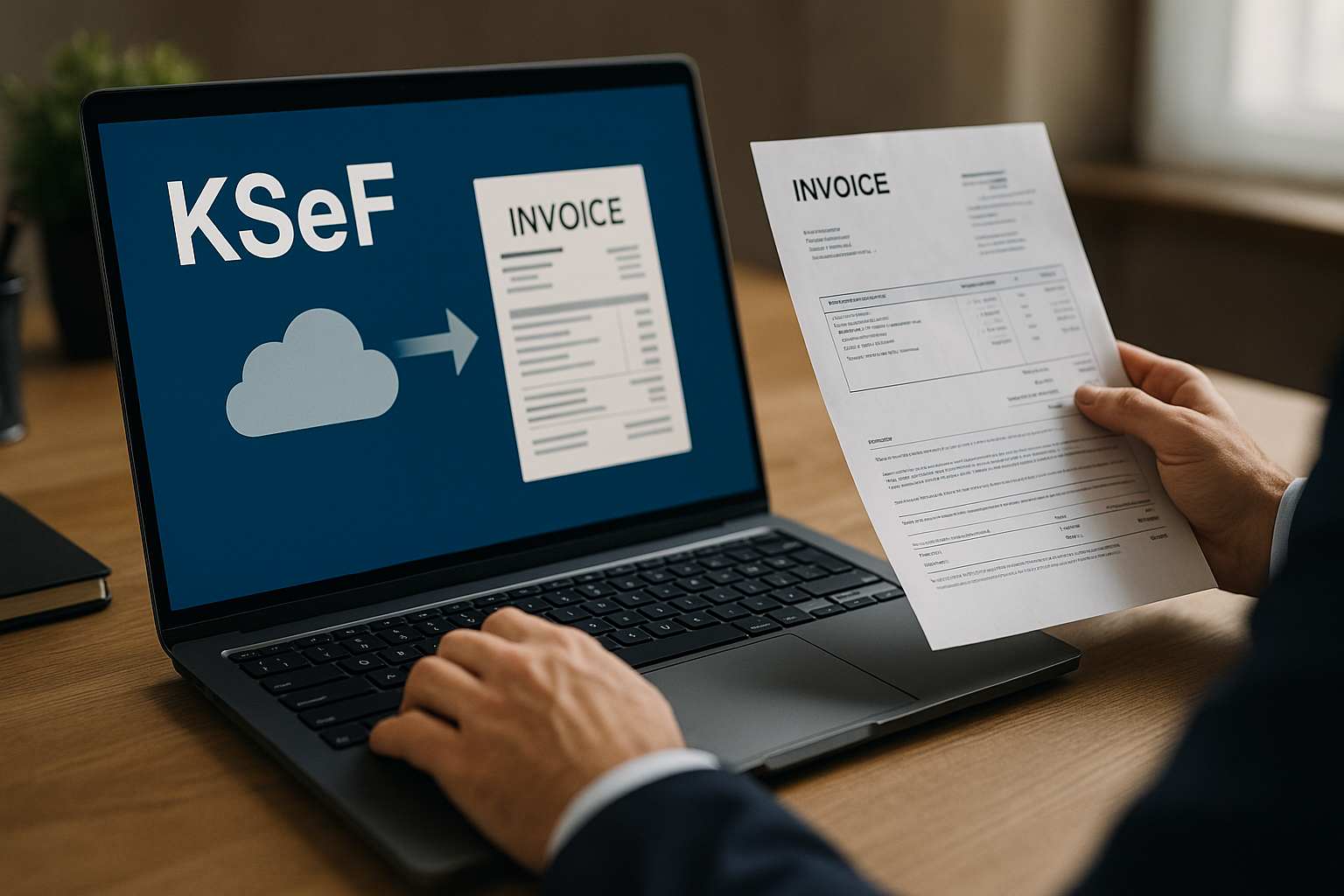
The introduction of the National e-Invoice System (KSeF) evokes a mix of anxiety and hope among accountants. On one hand, a digital revolution and automation are promised, on the other – real concerns about overloading accounting offices, organizational chaos, and increased responsibility for clients' mistakes. Can KSeF really paralyze the work of accounting offices, or will it rather become an impetus for professionalization and process organization?
Where do accountants' concerns about KSeF come from?
Research shows that a significant portion of companies – including accounting offices – are still not ready for KSeF, even though its use is inevitable. Accountants' concerns focus on several areas:
- sudden change in work methods – transitioning from paper documents and scans to full digitization of invoice circulation,
- new formal obligations – managing permissions in KSeF, handling e-invoices, system integrations,
- time pressure – the need for quick implementation of procedures and employee training,
- fear of responsibility for clients' mistakes, especially in the context of private invoices issued to company data.
The anxiety is compounded by the fact that many accounting offices have postponed preparations for a long time, hoping that changes would be delayed or softened. Meanwhile, KSeF is not a pilot project – it's a systemic change.
How does KSeF change the work of accounting offices?
KSeF radically changes the circulation of documents and the model of cooperation with clients. Instead of waiting for paper invoices or emails with scans, the accounting office – after granting appropriate permissions – will be able to download cost and sales invoices directly from the system.
In practice, this means, among other things:
- the end of manually transcribing data from paper and scans,
- the possibility of automated import of invoices into accounting programs,
- faster access to full client documentation,
- changing the role of the office – from "document recipient" to a partner managing invoice circulation.
At the same time, accounting offices must ensure integration of accounting software with KSeF, update systems, and develop new procedures for describing and verifying documents.
New obligations of accounting offices regarding KSeF
Implementing KSeF is not just about clicking a new option in the accounting program. For offices, it means a set of new organizational and legal tasks.
Managing permissions and access
An accounting office will be able to use KSeF only if the client formally grants it permissions in the system. The office's tasks will include, among others:
- supporting clients in the process of granting, changing, and revoking permissions,
- internally regulating who in the office has access to what data and to what extent,
- ongoing control to ensure permissions are up-to-date after organizational changes at clients.
New accounting and verification procedures
The way of working with documents is also changing:
- the need to develop procedures for importing invoices from KSeF, their verification, and assignment to appropriate accounting periods,
- adapting accounting schemes to the data available in structured e-invoices,
- developing rules for handling incorrect invoices, corrections, or duplicates.
Communication and client education
KSeF forces a new model of cooperation with the client. Accounting offices will need to educate clients on one hand, and clearly define the scope of their own responsibility on the other.
This particularly concerns the issue of invoices documenting private expenses that will enter KSeF under the client's company data. Accountants indicate that this "mix" can be troublesome, as clients will still expect selection, and the accounting office does not have full autonomy in deciding which documents to include in the books.
Can KSeF paralyze accounting offices?
The risk of "paralysis" does not stem from the KSeF technology itself but from a lack of preparation – properly arranged processes and trained employees. Analyzing statements from experts and practitioners, several real threats can be identified:
- sharp increase in the number of activities in a short implementation period (configuration, tests, training, changes in client contracts),
- organizational chaos in offices that still rely on manual document circulation,
- overloading accountants with the need to combine current service with implementing new procedures,
- increased risk of errors at the beginning – resulting from unfamiliarity with the system or lack of consistent cooperation rules with clients.
On the other hand, industry sources emphasize that the goal of KSeF is to improve the work of accounting offices in the long run: faster document circulation, fewer documentation gaps from clients, and the possibility of reducing manual, repetitive tasks.
Real benefits of KSeF for accounting offices
Despite initial difficulties, well-prepared offices can genuinely benefit from KSeF. The following advantages are pointed out:
- direct access to client invoices – no more chasing documents and explaining that "invoices for… are missing."
- reducing the problem of incomplete documentation – a significant portion of cost invoices will be automatically available in the system,
- automation of data import – lower risk of errors when transcribing and time savings,
- possibility of developing advisory services – supporting clients in implementing and handling KSeF can become a new, paid element of the office's offer.
Some analyses indicate that in a few years, offices that implement automation and properly organize processes will be able to serve more clients without proportionally increasing employment.
What can accounting offices do now?
To avoid paralysis, active preparation for KSeF is crucial. Experts recommend several steps that should be taken as soon as possible:
1. Audit of processes and software
- analyzing the current document circulation (paper, email, scans),
- checking if the accounting programs used are ready for integration with KSeF,
- determining which activities can be automated.
2. Developing procedures for cooperation with clients
- updating contracts with clients regarding KSeF, permissions, and responsibilities,
- establishing rules for handling private invoices on company data,
- clearly defining what is the office's responsibility and what is the client's.
3. Training and communication
- training for office employees on handling KSeF and new procedures,
- webinars, instructions, and materials for clients – how to issue invoices, how to grant permissions, what are the consequences of mistakes,
- appointing a "KSeF leader" in the office who will coordinate the implementation.
KSeF – threat or opportunity for accounting offices?
For some accounting offices, KSeF may be a painful test – especially where paper has dominated so far, and processes were not described and organized. However, for offices that treat this change strategically, it may be an opportunity to:
- improve the quality of services and standardize them,
- strengthen the advisory position towards clients,
- increase efficiency through automation,
- build a competitive advantage over less prepared entities.
So, will KSeF paralyze the work of accounting offices? It might – but primarily those that ignore preparations. Where processes, tools, and education have been taken care of in advance, KSeF has the chance to become not a problem, but a natural stage in the digital evolution of accounting.







Comments (0)
No comments yet. Be the first to comment!
Leave a Comment